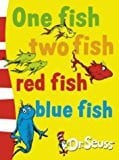
About This Book
Reach for this book when you want to spark a sense of joyful absurdity or help a toddler discover that reading is a form of play. It is the perfect choice for a wiggly child who needs high energy and quick transitions rather than a linear narrative. This board book adaptation introduces young children to the whimsical world of Dr. Seuss, where yellow pets named Gump and seven-humped Wumps roam freely. It uses rhythmic, repetitive language to explore basic concepts like counting and opposites while celebrating the idea that the world is full of funny, wonderful things. Parents will appreciate how the bouncy meter keeps children engaged, turning a vocabulary lesson into a shared moment of laughter and creative wonder.
What Parents Should Know
Sensitive Topics
None.
Ideal Reader
A two- or three-year-old who is beginning to recognize patterns in language and enjoys physical humor. It is also excellent for a child who may have a shorter attention span, as each page or spread stands alone as a complete thought.
Parent Prep
This book can be read cold. It is designed for performance, so parents should be prepared to lean into the rhythm and perhaps use different voices for the various creatures to enhance the experience. A parent might choose this after hearing their child ask "Why?" about the world or noticing the child's growing interest in naming the colors and objects around them.
Age Experience
For a two-year-old, the experience is purely phonetic and visual: they will track the bright colors and the bouncing rhythm of the words. A four- or five-year-old will begin to appreciate the humor of the "nonsense" and may try to predict the rhymes or point out the contradictions in the opposites.
What Makes It Special
Unlike many concept books that use realistic photos or simple drawings, this book uses surrealism to teach logic. By showing a "seven-hump Wump," it reinforces the concept of counting through the lens of pure imagination.
Read plot summary
This is a concept-based board book that moves through a series of vignettes featuring various Seussian creatures. It uses rhyme and whimsical illustrations to introduce colors (red fish, blue fish), numbers (one fish, two fish), and opposites (fat and thin, high and low, old and new).
This overview was generated by AI based on the book's content and reviews, and may not capture every nuance.
Discussion Prompts
1
If you could have any of these funny creatures as a pet, like the Gox or the Wump, which one would you pick and why?
2
We saw a fat fish and a thin fish. Can you find two things in this room that are opposites, like big and small?
3
The book says 'funny things are everywhere.' What is the silliest or funniest thing you have seen today?
4
Some fish had stars and some had none. If you were a Seuss fish, what color would you be and what would you have on your fins?


