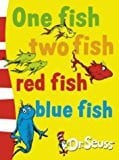
About This Book
A parent would reach for this book when they want to unlock a child's creative confidence or help a literal thinker embrace the joy of 'what if.' Instead of a linear plot, this classic Seuss title is a celebratory manifesto for the imagination, encouraging children to think beyond the visible world to invent their own creatures, colors, and possibilities. It is an essential tool for building cognitive flexibility and vocabulary through play. With its iconic rhythmic meter and absurdist illustrations, the book validates a child's internal world. It speaks to the emotional need for intellectual freedom, making it an excellent choice for kids who may feel constrained by rules or who are beginning to experiment with their own storytelling. The tone is joyful and empowering, reminding readers that their minds are limitless playgrounds.
What Parents Should Know
Sensitive Topics
None.
Ideal Reader
A preschooler or early elementary student who loves wordplay, or a more reserved child who needs a 'permission slip' to be silly and imaginative. The pattern-based language and non-literal concepts make it a great fit for children who thrive on rhythmic repetition and abstract play.
Parent Prep
No prep needed. This is a perfect 'cold read.' The rhythmic meter is highly predictable, making it easy to perform with energy. A parent might choose this after noticing their child is stuck in a 'logical' rut or when they want to encourage a child to start drawing or writing their own stories.
Age Experience
For a 3-year-old, the book is a sensory experience of rhyme and bright colors. For a 6 or 7-year-old, it becomes a challenge to their own creativity, often sparking 'I can think of something even weirder' competitions.
What Makes It Special
Unlike many concept books that teach children *what* to think (colors, shapes, numbers), this book focuses entirely on *how* to think. It prioritizes the process of imagination over the acquisition of facts, using nonsense to build real-world confidence.
Read plot summary
The book functions as a poetic prompt, guiding the reader through a series of increasingly surreal 'thinks.' It moves from simple concepts like colors and animals to entirely invented entities like the Vipper of Vipp and the Quadray. The narrative voice encourages the reader to take agency over their own thoughts, ending with the empowering question: 'Why stop?'
This overview was generated by AI based on the book's content and reviews, and may not capture every nuance.
Discussion Prompts
1
If you could invent a new color that nobody has ever seen before, what would you call it and what would it look like?
2
The book mentions 'thinks' that race and 'thinks' that are slow. What do your fast thoughts feel like compared to your slow ones?
3
If you met a Guv of Guff, what do you think you would talk about?
4
Dr. Seuss asks 'Why stop?' at the end. What is one more 'think' we can add to the book together right now?