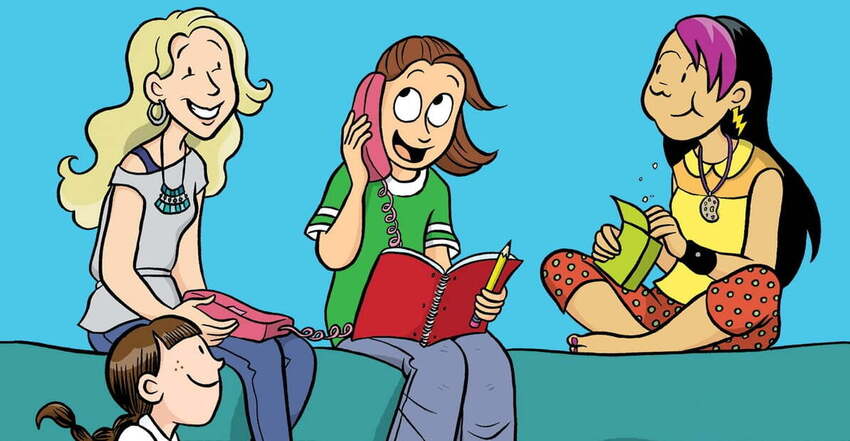
What Age Is The Baby-Sitters Club For?
Your kid has spotted The Baby-Sitters Club at the library, or a friend mentioned it, or they watched the Netflix show and want to read the books now. Good news: this is one of the great entry points into independent reading for kids who love stories about friendship, real-life problems, and girls who get things done.
But "The Baby-Sitters Club" is actually several different things at this point, and the right starting place depends on your kid's age and reading level. There are the original chapter books from the 1980s and 90s, graphic novel adaptations illustrated by Raina Telgemeier and later Gale Galligan, and a spin-off series called Baby-Sitters Little Sister for younger readers. Here's how to figure out which one fits.
The short answer
Ages 8 to 12 for the original novels and the graphic novels. Ages 6 to 9 for Baby-Sitters Little Sister. Most kids hit the sweet spot around 8 or 9, when they're old enough to follow the social dynamics but young enough that the world of Stoneybrook still feels exciting.
The graphic novels are the easier entry point. They're shorter, visually engaging, and adapted for modern readers. The original novels are longer and more text-dense, but kids who are strong readers at 8 or even 7 can handle them. The content is gentle in both formats.
“Ann M. Martin wrote 131 BSC books and each one taught a girl that her problems were real, solvable, and shared.
What parents should know
The series handles real topics honestly but gently. Across the 131 original novels, storylines touch on:
Divorce and blended families. Dawn's parents are divorced. Kristy's mom remarries. These come up naturally, not as "issue books." Kids see characters navigating two households, new step-siblings, and complicated feelings about it, and the treatment is warm and normalizing.
Illness and disability. Stacey has Type 1 diabetes. It's a consistent part of her character, not a plot device. Some books deal with a parent's illness or a child client with disabilities. The handling is straightforward and kind.
Death and loss. A few books deal with the death of a grandparent or a pet. The tone is sad but hopeful.
Social dynamics. Friendship conflicts, feeling left out, jealousy, competition. This is the emotional core of the series and the main reason kids connect with it.
Dated attitudes. The original novels were written in the late 1980s and 1990s. Some language and attitudes around weight, appearance, and cultural sensitivity haven't aged well. The graphic novels have been updated for modern readers. If your kid is reading the originals, it's worth reading alongside them occasionally and talking about what's changed.
None of this is graphic or intense. Parents who previewed the Netflix adaptation already know the tone. The books are warmer and simpler than the show.
Where to start


“Ann M. Martin wrote 131 BSC books and each one taught a girl that her problems were real, solvable, and shared.
Already read them all?


Too young? Start here instead


Too old? Try these


Related Topics
More to Read

10 Books Like Dog Man
Your kid has read every Dog Man book twice. Here's what to hand them next. and why each one scratches the same itch.

How to Talk to Kids About Bullying: What to Say Whether They're the Target, the Bystander, or the One Doing It
Bullying isn't a rite of passage. It's a pattern that adults can interrupt. if they know what they're looking at.

Board Books vs. Picture Books vs. Chapter Books: A Parent's Guide
Board book, picture book, early reader, chapter book, middle grade, YA. what's the difference, and when does your kid move from one to the next?

8 Books About Jealousy for Kids
Jealousy isn't a character flaw. It's a feeling that needs a name. These books give it one.